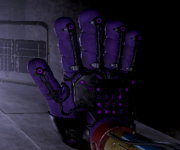
Poppy Playtime Chapter 6



Advertisement


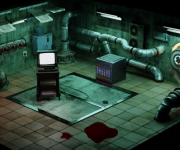
What begins as a routine descent into another sealed sector quickly shifts in Poppy Playtime Chapter 6, where the factory reveals systems that no longer follow predictable patterns. The player enters areas that appear partially abandoned yet still active, suggesting that something continues to operate behind the scenes. Story elements are scattered across the environment, requiring attention to small visual and audio cues to understand what occurred here.
The gameplay centers on linking separate systems into a working chain. Players move between rooms to restore functions, redirect energy, and unlock pathways that depend on previous actions. Objectives are rarely isolated; instead, they overlap and require tracking multiple elements at once. This creates a slower, more deliberate pace where progress comes from understanding relationships within the environment rather than following direct instructions.
Story Delivery And Context
Narrative information is embedded in the surroundings rather than presented directly. Clues appear through changes in the environment, recorded messages, and structural inconsistencies. The chapter expands on earlier events but avoids clear explanations, leaving interpretation open. This approach makes exploration necessary not only for progression but also for understanding the story.
Mechanics And Puzzle Design
Interactions are built around sequences that must be executed correctly. Players activate systems, adjust mechanisms, and return to previous locations to complete multi-step solutions. Some elements reset or become unavailable if not used in time, adding pressure without relying on constant threats. The design encourages experimentation and pattern recognition.
Key Features
- Interconnected objectives across multiple areas
- Environmental storytelling with minimal guidance
- Multi-step puzzles requiring coordination
- Revisiting locations with new functionality
- Gradual increase in complexity
Compared to earlier chapters, this part reduces linear direction and increases reliance on player interpretation. Unlike many games in the same genre, it limits frequent interruptions and instead builds tension through uncertainty and system complexity. The experience focuses on understanding how the environment works as a whole.
The progression remains steady, combining exploration and interaction in a way that gradually reveals both mechanics and narrative without explicit instruction.